
Distribution Challenges in Emerging Markets
A product no one can find doesn't exist. In Indonesia, that isn't a metaphor — it's a logistics reality spread across 17,504 islands.
Distribution is the hardest part of entering Indonesia, Vietnam, or the Philippines because none of them have a single national channel. Each requires running two supply chains at once: modern trade (convenience chains, supermarkets, e-commerce) covering the wealthier urban minority, and millions of independent traditional retailers — warungs, sari-sari stores, tap hoas — reaching everyone else. Get the balance wrong and your product is invisible to most of the country.
The Brutal Geography of Indonesian Distribution
Indonesia is the fourth most populous country on earth, spread across 17,504 islands. Getting a product from Jakarta to Surabaya is manageable. Getting it to Sulawesi, Kalimantan, or Papua requires a completely different logistics setup — multiple modes of transport, local last-mile distributors, and tolerance for spoilage rates that would be unacceptable in Europe.

Indomaret and Alfamart together run over 45,000 convenience stores nationwide — but they cover primarily Java and Bali. For the other 260 million Indonesians living outside those islands, traditional trade is still the dominant channel.
✅ Success Story: Wings Group — The Distribution Strategy That Beat Unilever

Wings Group, an Indonesian consumer goods company, built market share not by outspending Unilever on advertising but by out-distributing them. It built an exclusive network of over 500 sub-distributors across Indonesia's outer islands — locations Unilever's national distributors deprioritised due to low volume and high logistics cost. By 2020, Wings held 35%+ market share in detergent outside Java, often outselling Unilever 2-to-1. Distribution as competitive strategy is the most underrated insight in Southeast Asian consumer goods.
What Just Changed: Indonesia's New Distribution Rules
Indonesia's Government Regulation No. 3 of 2026, effective 15 January 2026, rewrote parts of the trading sector framework. It relaxed the rigid sole-distributor exclusivity terms and the mandatory dual-channel retail requirement, giving companies more freedom to structure distribution agreements. In exchange, it introduced stricter transparency obligations across the distribution chain and a stronger enforcement posture, including explicit checks on pyramid schemes and unregistered warehousing. The net effect: more commercial flexibility, but distribution contracts and warehouse registrations now need to be audit-ready from day one.
Vietnam: The Distribution Revolution in Real Time
Vietnam's retail landscape is transforming faster than almost any other market in the region. Modern trade grew from 15% of consumer goods sales in 2015 to over 30% by 2022 (Nielsen IQ). Vinmart (now WinMart) expanded from zero to 3,000+ stores. But rural Vietnam — still 65% of the population — remains dominated by traditional trade. A dual-channel strategy is non-negotiable.
There's a regulatory shift to watch here too. A draft decree replacing Decree 09/2018/ND-CP would require foreign retailers to hold an Investment Registration Certificate before opening any store over 500 square metres — previously a simple branch registration sufficed. Separately, Vietnam's new Law on E-Commerce (No. 122/2025/QH15) took effect 1 July 2026, tightening rules for cross-border digital sellers. Together they signal a market getting more sophisticated about who it lets scale — and how fast.
The Philippines: 800,000+ Sari-Sari Stores Are the Market
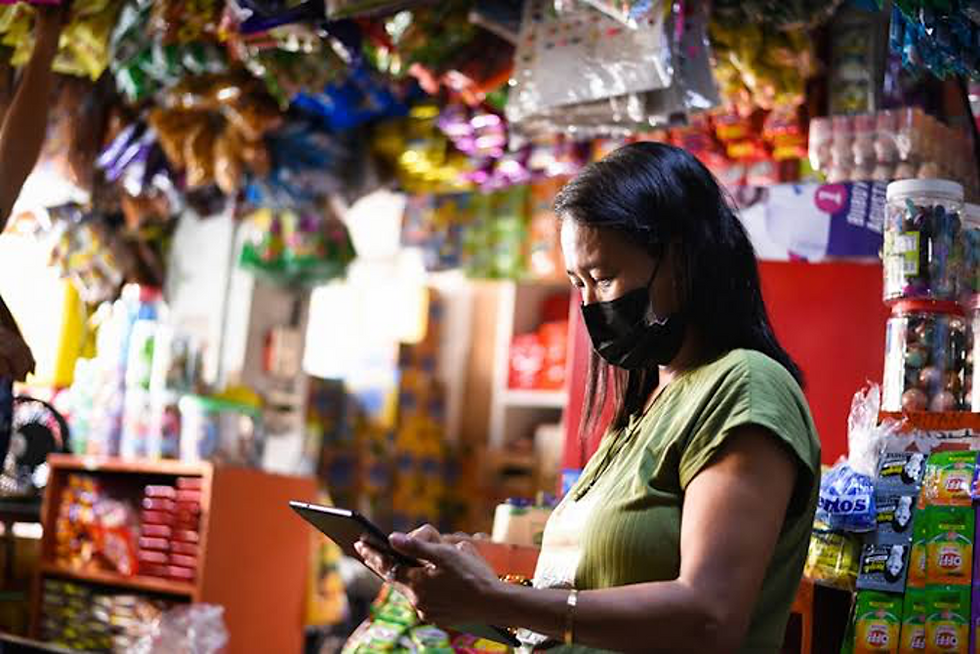
In the Philippines, 80% of consumer goods still move through sari-sari stores — small, family-run neighbourhood shops, numbering in the hundreds of thousands across the archipelago's 7,600+ islands. National distribution deals with 7-Eleven or SM Supermarket look impressive on a slide deck, but they miss most of the country. Brands that win here build sari-sari-specific pack sizes, credit terms, and delivery routes — not a scaled-down version of their modern-trade playbook.
About Us
Curt & Co Pte Ltd is a consulting company started amongst a group of business owners who were looking for a consulting company themselves for advice !
Our offices and our focus markets are in Philippines, Indonesia, Singapore, Vietnam and Malaysia. With clients ranging from 1 man operating SMEs to listed companies, we are proud to have helped our clients across different industries gain market entry into the South East Asian region.
Contact us at marcus@curtconsult.com if you want to talk!

Comments